Clean a Hacked Site with Suspect Content and Hacked Files

So it happened. Your site got hacked. Don’t panic. If you haven’t triaged the hack yet, start with our Joomla hacked-site guide for the first steps to take before you touch anything else. If you’re not 100% sure yet, start with how to tell if your WordPress site is actually hacked - it covers the signs vs. false alarms. For the full rundown on what happens when a WordPress site gets hacked or a Joomla site gets hacked, those guides cover warnings signs, consequences, and prevention - but this post is about the cleanup process using mySites.guru. If your Joomla site uses the Astroid Framework, check our Astroid vulnerability breakdown first - it covers the specific backdoors and cleanup steps for that attack. Extension vulnerabilities like the Novarain Framework exploit are another common entry point, particularly because shared library plugins like nrframework get bundled as silent dependencies that site owners don’t realise are there.
Why Should You Back Up First (and Not Restore)?
Do it now. Back up your site. Even if it’s hacked. Back up right now. Done? Good.
You’ll see people recommend restoring from your last clean backup. This should only be a last resort. Restoring wipes away evidence that someone experienced can use to understand how you were hacked in the first place. Worse, it re-introduces the same security hole that let the attacker in.
Want an expert to just fix it?
If you’d rather hand this off, visit fix.mysites.guru and submit a request. For a one-time set fee of GBP 120, Phil will clean your site, upgrade it, lock it down and hand it back secure. Non-subscribers get a free month of mySites.guru included.
How Do You Find the Hacked Files with mySites.guru?
mySites.guru has a set of tools built specifically for this. The platform checks every line of code in your webspace to show you what’s actually happening on your site.

The most popular tool for hack cleanup is the suspect content scanner.
How Do You Discover Suspect Content in Your Files?
After your site has been audited, you’ll find the suspect content tool in the “Hacked?” section of the Audit tab.
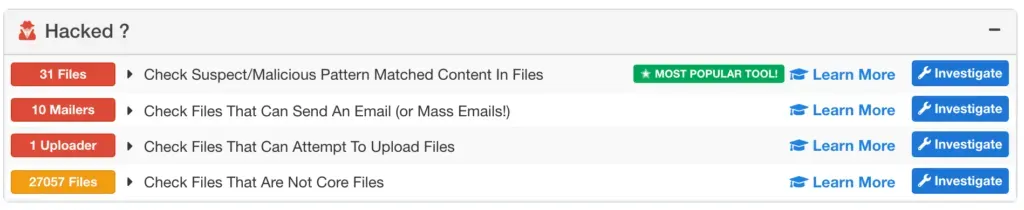
Clicking Investigate loads a real-time scan of your files:

The tool shows the file path, filename, last modified date, size, and permissions. You get buttons to edit the file, view the suspect content matches, or delete the file entirely. Before deleting anything, make sure you know which results are confirmed hacks and which are pattern matches needing a closer look.
That single-file action is now backed by a full web file manager too, for when the cleanup goes beyond the files an audit has already flagged: browse the whole site, jailed to its root, with every delete going to a recoverable trash first rather than gone for good.
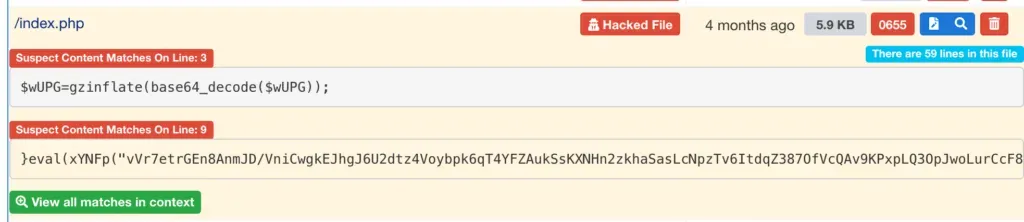
Click on a filename and the platform retrieves the file from your site, runs it against the pattern matching engine, and highlights the exact lines that look suspicious:
How Do You Revert Core Joomla and WordPress Files?
In the example above, index.php has two lines of injected code. You could edit those lines out manually, but there’s a faster way.
The first tool in the Audit tab is the core file integrity check - it lists every core file (Joomla or WordPress) that has been modified since release. Click on a file and you get a side-by-side diff: the original on the left, your modified version on the right. That is how a fake Cloudflare captcha injected into wp-includes/functions.php was on the list before anyone had a name for it.
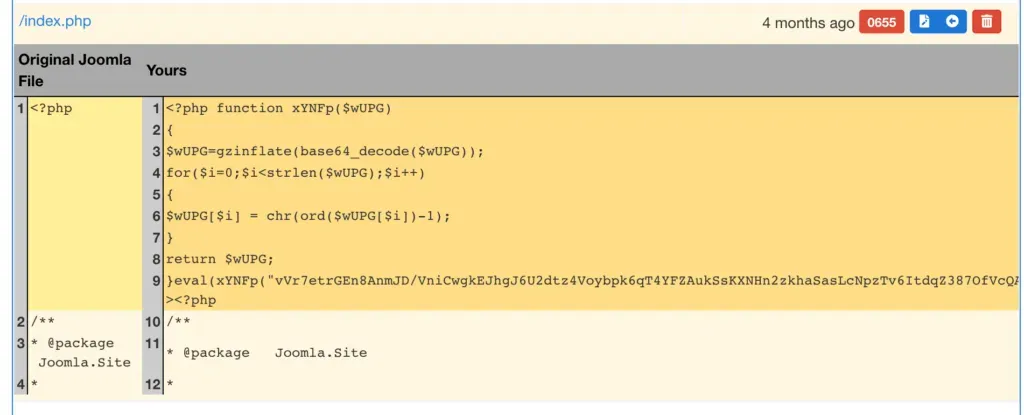
Click the blue arrow and the original file is restored in a single click - overwriting the hacked version and reverting all changes.
That handles core files an attacker changed. It does nothing about a file the attacker added to a core folder, because there is no original to revert to. The Impostor Files check is the one that finds those.

What Other Audit Tools Help Investigate a Hack?
The suspect content scanner and core file diff are just two of the tools available. The full security audit toolset includes checks for:
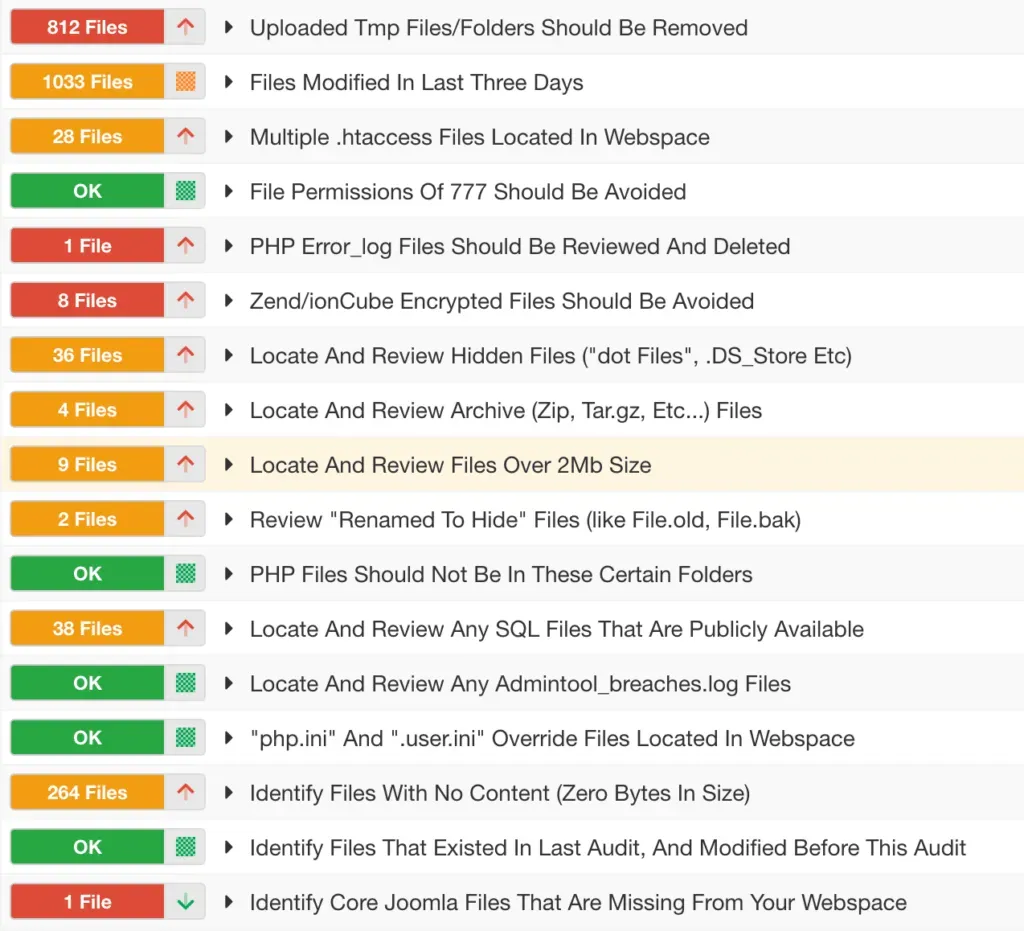
Not every flagged file is malicious. Some are hidden dot-files left behind by tools or hosting providers that are harmless but worth knowing about. Work through each tool and you’ll know exactly what needs cleaning.
How Do You Set Up Monitoring to Catch Future Hacks Early?
Once your site is clean, set up monitoring so you’ll know immediately if something changes again.
mySites.guru lets you add unlimited sites and run unlimited backups, snapshots, and audits. The real-time file monitoring checks a configurable list of critical files on every page load and emails you if any of them are modified.
This matters because the first hack often leaves a dormant dropper behind, and a second wave reactivates it days or weeks after your cleanup to plant more backdoors. Continuous file-change monitoring is how you catch that return visit.
Finding a hack the same day it happens is a completely different situation from discovering it three months later.
⚠️ Always back up before making changes
Before editing or restoring any files, take a fresh backup. If something goes wrong during cleanup, you need a way to get back to where you started.
Run a free audit on your site to see what mySites.guru finds.
This is part of our WordPress and Joomla security guide for agencies.
Frequently Asked Questions
Should I restore from a backup immediately after my site is hacked?
How does the mySites.guru suspect content tool work?
Can mySites.guru alert me if files change after a hack is cleaned up?
What does it cost to have Phil Taylor fix my hacked site?
 Written and edited by a human, with AI assistance. Our approach to AI